
You wash your hair expecting it to feel clean, soft, and fresh. Instead, it feels rough, tight, and dry almost immediately. If this sounds familiar, you’re not alone. Dry hair after wash is a common problem, yet many people misunderstand why it happens.
The issue is rarely “bad hair.” In most cases, it’s about how hair is washed, what products are used, and how moisture is lost during the process. Once you understand the real cause, fixing dry hair becomes much easier.
Why Hair Feels Dry Right After Washing
Hair dryness after washing usually means the hair’s natural balance has been disturbed. Shampoo removes dirt and oil, but when it removes too much, hair loses the protective layer that keeps it soft.
This happens more often than people realize, especially when washing habits stay the same for years without adjustment.

Shampoo Is Often the Main Culprit
Many shampoos are designed to clean deeply. While this sounds good, overly strong formulas strip natural oils from the scalp and hair shaft.
When this happens:
- Hair loses smoothness
- Cuticles lift, causing rough texture
- Moisture escapes quickly
As a result, hair feels dry even though it’s freshly washed.
Over-Washing Makes Dryness Worse
Washing hair too frequently doesn’t give the scalp time to rebalance. Each wash removes oil, and if washes happen too close together, the hair never recovers.
Signs you may be over-washing:
- Hair feels dry but scalp feels tight
- Ends look rough quickly
- Hair needs styling products just to feel normal
For many people, washing 2–3 times a week is enough.
Hot Water Dries Hair More Than You Think
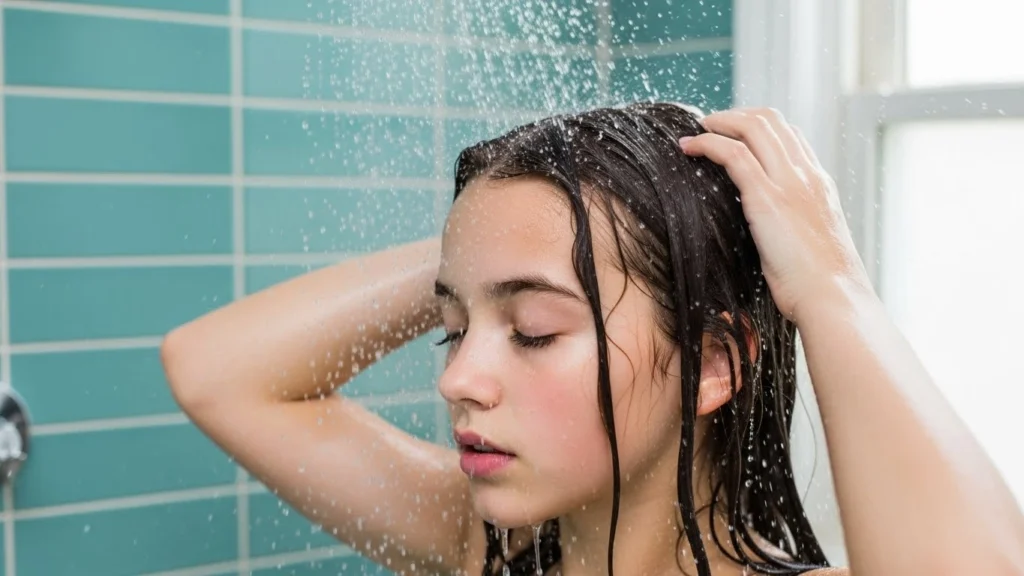
Hot water feels relaxing, but it opens the hair cuticle aggressively. This makes hair lose moisture faster.
When hair is washed in very hot water:
- Natural oils rinse away quickly
- Hair becomes porous
- Frizz and dryness increase
Using lukewarm water for washing and cooler water at the end helps seal moisture in.
Conditioner Mistakes That Lead to Dry Hair
Conditioner is meant to restore softness, but using it incorrectly can cancel its benefits.
Common mistakes include:
- Skipping conditioner completely
- Applying it to the scalp instead of lengths
- Rinsing it out too quickly
Conditioner works best when focused on mid-lengths and ends and left on for at least one minute.
Towel Drying Can Damage Wet Hair
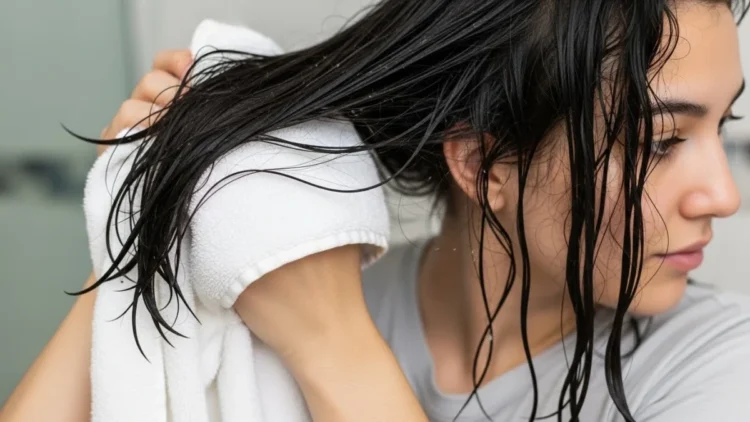
Hair is weakest when wet. Rough towel drying creates friction that damages the cuticle, leading to dryness and breakage.
Instead of rubbing:
- Gently squeeze excess water
- Use a soft towel or cotton T-shirt
- Avoid twisting hair tightly
This small change reduces post-wash dryness significantly.

Product Buildup Can Cause Dryness Too
Interestingly, dryness isn’t always caused by lack of moisture. Sometimes, product buildup blocks moisture from entering the hair.
Heavy styling products, silicones, or residue can make hair feel:
- Stiff
- Coated
- Dry despite conditioning
Occasional gentle clarifying helps reset the hair.
Hair Type Matters More Than People Think
Not all hair needs the same routine. Curly, wavy, and textured hair lose moisture faster than straight hair.
If you have:
- Curly or coily hair: you need more moisture
- Fine hair: you need lightweight hydration
- Chemically treated hair: you need extra care
Using a routine not suited to your hair type often results in dry hair after wash.
How to Fix Dry Hair After Wash
Fixing dryness isn’t about adding more products. It’s about changing the process.
- Choose a Gentle Shampoo
Look for formulas labeled mild, hydrating, or sulphate free.
- Reduce Wash Frequency
Give your scalp time to restore natural oils.
- Condition Properly
Apply conditioner mainly to lengths and ends.
- Rinse Smart
Use cooler water for the final rinse.
- Dry Gently
Avoid friction and heat immediately after washing.
These steps restore balance rather than forcing moisture.
Leave-In Products Can Help (If Used Lightly)
A small amount of leave-in conditioner or lightweight hair cream helps seal moisture after washing.
However, using too much can weigh hair down. The goal is softness, not coating.
Heat Styling Makes Dryness Permanent
Blow dryers, straighteners, and curling tools remove internal moisture from hair.
If heat is unavoidable:
- Use heat protection
- Lower temperature settings
- Avoid daily heat styling
Reducing heat use often solves dryness without changing products.
Diet and Hydration Affect Hair Texture
Hair reflects internal health. Poor hydration and lack of nutrients make hair weaker and drier.
Simple improvements include:
- Drinking enough water
- Eating healthy fats
- Getting enough protein
Hair improvements take time, but they start from within.
When Dry Hair Is a Sign of Damage
If hair remains dry despite routine changes, it may be damaged from:
- Chemical treatments
- Excessive heat
- Environmental exposure
In these cases, trimming damaged ends and focusing on gentle care is essential.
How Long Does It Take to See Improvement?
Hair doesn’t recover overnight. However:
- Within 1 or 2 weeks: texture feels less rough
- Within 3 or 4 weeks: softness improves
- Long term: hair becomes easier to manage
Consistency matters more than quick fixes.
Conclusion
Dry hair after wash is usually a sign that hair is being cleaned too harshly or cared for incorrectly afterward. The solution isn’t more products it’s better habits.
Once washing becomes gentler and moisture is protected, hair begins to feel softer, smoother, and healthier naturally.
Healthy hair doesn’t fight the wash. It recovers from it.






Leave a Reply