

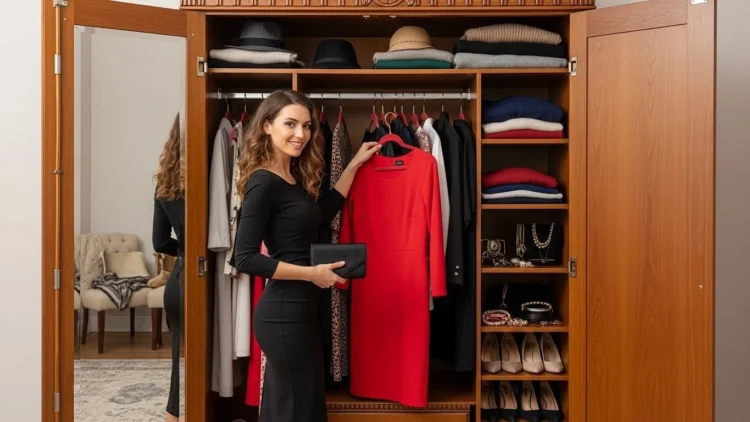
Most women do not struggle with fashion because they lack clothes. The real problem is having a wardrobe full of items that do not work together. When every piece only goes with one other thing, getting dressed feels like a daily puzzle, and the answer is usually to buy more clothes that also do not go with anything.
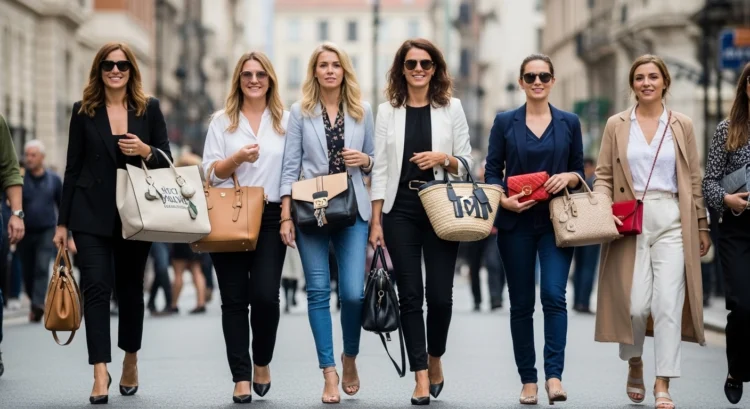
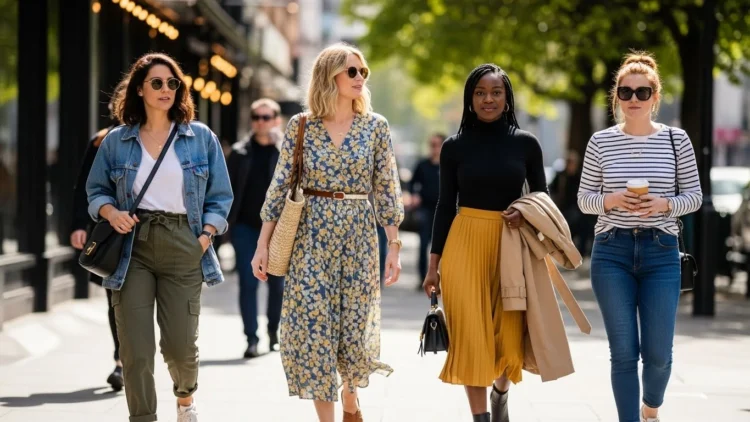
Wardrobe essentials fix that. They are the pieces you reach for again and again, not because they are trendy, but because they mix with everything else you own and make outfits happen almost by themselves. They are also the building blocks behind most everyday outfits for women in the UK, because a good outfit is usually just three or four essentials combined well.
Below is the full list of 15, named properly this time: what each piece does, what to look for when you buy it, what it typically costs in the UK, and where to find it.
Staples, Basics and Trends: What Is the Difference?
These three words get used as if they mean the same thing, but they do different jobs.
Basics are the plain foundations: a white T-shirt, a simple knit, a pair of straight leg trousers. They are rarely interesting on their own, but everything else depends on them.
Staples are the pieces your personal style returns to again and again. For one woman that is a blazer and loafers; for another it is a trench coat and ankle boots. Staples are basics with your signature on them, and they are the pieces worth spending more on, because you will wear them for years.
Trends are the short lived extras: a colour of the season, a novelty shape, a print everyone is wearing for six months. Trends are not the enemy, but they should be the smallest and cheapest part of your wardrobe, bought after the essentials are in place.
The list below is made of basics and likely staples. Get these right and trends become optional decoration rather than a rescue mission.
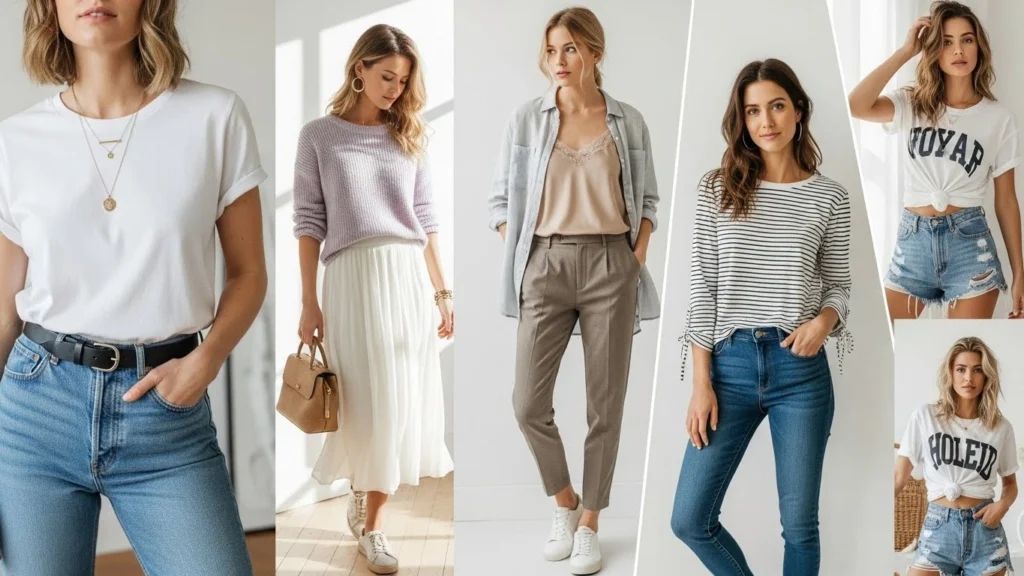
The 15 Women’s Wardrobe Essentials
1. The White Shirt
A crisp white shirt is the hardest working top you can own. It sharpens jeans, sits neatly under jumpers and blazers, and can be worn open over a T-shirt in warmer weather. Look for cotton or a cotton rich fabric with enough structure to hold its shape, buttons that do not gape, and a collar that sits flat. A slightly relaxed fit is more versatile than a skin tight one. Expect to pay £20 to £70 at M&S, Uniqlo and Zara, with Arket at the top of that range for a heavier cotton.
2. Plain T-Shirts in Neutral Colours
Good plain T-shirts in white, black and one soft neutral (grey, navy or beige) are the base layer of half your outfits. They go under blazers, inside dungarees, with skirts and with every style of trouser. Look for a mid weight cotton that is not see through, a neckline that keeps its shape after washing, and a length you can tuck in or leave out. This is not the place to buy the cheapest option: thin T-shirts twist, fade and look tired within months. Pay £8 to £25 per top at Uniqlo, M&S and Arket.
3. A Quality Crew Neck Jumper
A crew neck knit in a neutral colour such as navy, grey, camel or burgundy layers over shirts, under coats and on top of dresses, which makes it one of the most reached for pieces in a British wardrobe. Look for natural fibres or blends with real wool or cotton content, because pure acrylic tends to pill and lose shape quickly. The knit should feel dense rather than loose and shiny, and the cuffs should spring back when stretched. Expect £35 to £90 at M&S for lambswool, Uniqlo and John Lewis.
4. A Fine Roll Neck
The roll neck is the quiet layering hero of the colder months. It turns a summer dress into a winter outfit, sits smoothly under a blazer, and looks polished worn alone with trousers in spring. Look for a snug but comfortable fit and a fabric with some stretch that recovers rather than bags at the neck. Black is the most useful first colour, with cream or grey as a second. Prices run from £15 to £40 at Uniqlo, M&S and Zara.
5. Straight Leg Trousers
A pair of tailored straight leg trousers in black or navy bridges the gap between smart and casual better than any other bottom. They work with trainers and a T-shirt, or with a shirt and loafers for something closer to office wear. Look for a mid or high rise, a fabric with a little structure, and a hem that skims the top of your shoe. Always try trousers sitting down before you buy: comfort at a desk matters as much as the mirror. Pay £30 to £70 at M&S, Next, Zara and Arket.
6. Dark Wash Jeans
Straight leg jeans in a dark indigo or black wash, without rips or heavy fading, pair with almost everything in this list, from white trainers to heeled boots. They are also the piece most women wear more than any other, so fit matters more here than anywhere. Look for denim with a little stretch that still feels firm, a waistband that does not dig in when you sit, and a leg length you will not need to alter. Expect £30 to £80 at M&S, Zara and John Lewis, which stocks brands such as Levi’s.
7. A Single Breasted Blazer
A well cut blazer in navy, black or grey instantly makes jeans and a T-shirt look deliberate, and it finishes dresses for evenings and events. Look for shoulders that sit exactly on your shoulder line, sleeves you can push up without a fight, and a fabric that does not crease the moment you sit down. A lined blazer hangs better and lasts longer than an unlined one. Prices range from £50 to £120 at Zara, M&S and John Lewis.
8. A Trench Coat
The trench is the classic British answer to spring and autumn, smart enough for work and relaxed enough for weekends, and it shrugs off the light rain that ruins other coats. Look for a water resistant cotton fabric, a length that reaches mid calf, and a belt so you can wear it open or cinched. Check it fits comfortably over a jumper before you commit. Expect to pay £60 to £150 at M&S, Zara and John Lewis.
9. A Wool or Wool Blend Coat
If the trench handles the shoulder seasons, a proper wool coat is your winter workhorse, and you will probably wear it more than any other item you own between November and March. Look for the highest wool content you can afford (50 per cent or more), a full lining, and enough room to fit knitwear underneath without straining the buttons. Neutral colours such as black, camel and charcoal earn far more wears than a statement colour. Expect £90 to £200 at M&S, John Lewis and Zara. For how to layer underneath it, see our cold weather layering guide.
10. A Go Anywhere Dress
Every wardrobe needs one dress that simply works: for lunch, for work, for an evening out with a change of shoes. A knitted midi or a wrap style in a plain colour is usually the safest bet. Look for a fabric that does not cling or crease badly, a length that works with both boots and trainers, and a neckline you feel comfortable in all day. If a dress needs special underwear, constant adjusting or a specific jacket, it is not an essential. Pay £35 to £80 at M&S, Next and Zara.
11. A Midi Skirt
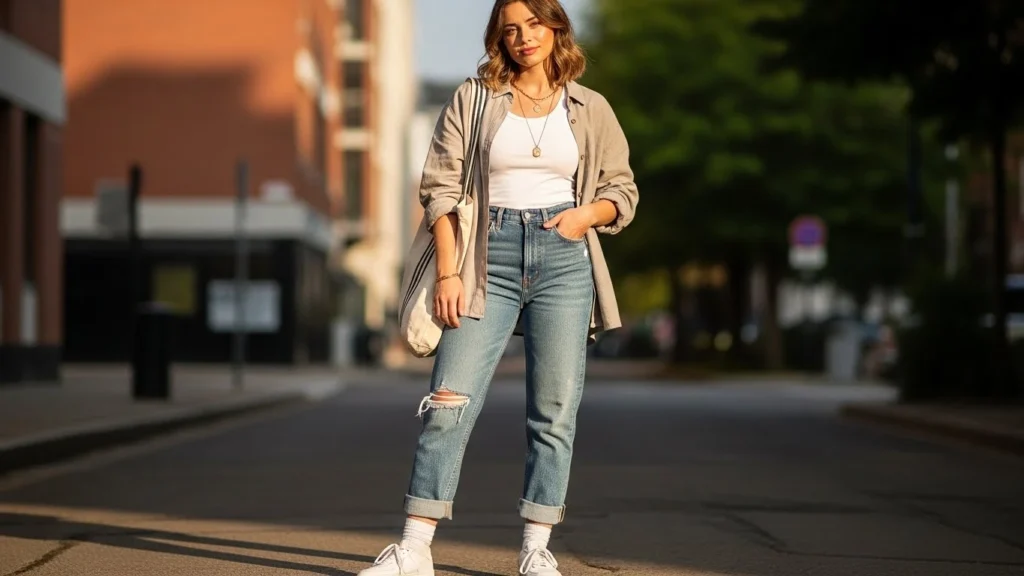
A midi skirt in a bias cut satin or a simple A line shape adds the variety that stops an essentials wardrobe feeling like a uniform. It dresses up jumpers and T-shirts, works with ankle boots in winter and sandals in summer, and covers the days when trousers feel wrong. Look for a lined or slightly heavier fabric so it skims rather than clings, and a waistband that sits flat. Expect £25 to £60 at M&S, Zara and Uniqlo.
12. Clean White Trainers
Minimal white trainers in leather or a leather look finish have become a genuine essential, because they make dresses, tailoring and skirts feel modern and wearable rather than dressed up. Look for a simple shape without heavy logos, a cushioned sole, and an upper that wipes clean, because grubby trainers undo the whole effect. Expect to pay £40 to £95 at M&S, Next and John Lewis.
13. Ankle Boots
A pair of ankle boots in black or dark brown, with a low block heel, handles the months when trainers are too casual and sandals are impossible. They work with jeans, dresses and skirts, which is exactly what an essential has to do. Look for a heel height you can genuinely walk in all day, a sole with some grip for wet pavements, and leather that can be polished back to life each season. Pay £50 to £120 at M&S, Next and John Lewis.
14. Classic Loafers
Loafers fill the gap between trainers and heels: smart enough for work and polished outfits, flat enough for long days on your feet. They are at their best with trousers, jeans and midi skirts. Look for soft leather that does not need weeks of breaking in, a sturdy sole rather than a paper thin one, and a classic shape that will not look dated next year. Expect £45 to £110 at M&S, Next and John Lewis.
15. A Structured Handbag
The final essential is a medium sized structured bag in black, tan or burgundy, big enough for your daily basics but not so big it swallows them. Structure is the point: a bag that holds its shape makes even a simple jeans and jumper outfit look finished. Look for a zip closure, straps that fit over a coat, and a lining you can clean. Expect £40 to £150 at M&S, John Lewis and Zara. If you are choosing between shapes, our guide to the types of handbags for women explains what each style does best.
The Cost Per Wear Maths: How to Judge What Is Really Worth It
Price tags lie. The honest way to judge a piece is cost per wear: take the price and divide it by the number of times you will realistically wear it.
Take a good wool coat at £90. Worn through two British winters, it easily reaches 100 wears, which works out at 90p per wear. Now take a £25 trend top bought for one occasion and worn twice before it dates: that is £12.50 per wear. The “expensive” coat is nearly fourteen times cheaper than the bargain top, every single time you put it on.
A few more examples show how quickly the maths changes:
- Quality jumper at £60, worn 60 times: £1 per wear
- Dark jeans at £60, worn 150 times: 40p per wear
- Ankle boots at £100, worn 80 times: £1.25 per wear
- Trend dress at £35, worn 3 times: £11.67 per wear
This is why essentials deserve the bigger share of your budget. They are not the costly option. Worn on repeat, they are the cheapest clothes you own, and the pieces gathering dust at the back of the wardrobe are the expensive ones, whatever their price tags said.
How to Build Your Essentials Slowly
A common mistake is trying to buy the whole list at once. Nobody needs to, and most budgets should not. A wardrobe grows best one deliberate piece at a time.
Start with the gaps you actually feel each week. If you stand in front of your wardrobe every morning wishing for a decent coat, that is piece one, not the handbag you saw online. Keep a short list on your phone so that sales and shopping trips work for your plan instead of distracting you from it. One or two pieces a month is plenty, and within a season the change is obvious.
Pay attention to what you reach for and what stays untouched. Replacing a worn out favourite with a better version of the same thing is one of the smartest buys you can make, because the cost per wear is already proven. Over time, the patterns in your own wardrobe tell you more than any shopping list can, and your essentials stop being generic and start being yours.
Wardrobe Essentials FAQs
What are the most important wardrobe essentials for women?
If you had to start with five, choose a white shirt, dark wash jeans, straight leg trousers, a quality knit jumper and a coat that suits your climate. Add white trainers and ankle boots next. These pieces cover most everyday outfits between them.
How many wardrobe essentials do I actually need?
Around 15 to 20 core pieces suit most women. The exact number matters less than whether the pieces work together in a shared colour palette. More than that is personal choice and lifestyle, not necessity.
How much should I spend on wardrobe essentials?
Spend the most on the pieces you will wear most often, typically the coat, boots, knitwear and bag, and less on T-shirts and trend items. Bought at the prices in this guide, the full list comes to roughly £700 to £1,200 in total, but it is meant to be built up over a year or more, not bought in one go.
How do I build a wardrobe of essentials on a budget?
Buy one or two pieces a month, use mid season sales for the bigger items such as coats and boots, and judge everything by cost per wear rather than the sale price. Looking after what you own (polishing boots, de-pilling knits, repairing hems) stretches every pound further.
Final Thoughts
Building a wardrobe around essentials is not about owning less or following rules. It is about choosing pieces that genuinely work for you and for each other, so getting dressed takes minutes instead of a morning negotiation.
If you want to take the idea further, our capsule wardrobe guide shows how these essentials shrink into a small, hard working collection. For putting the pieces together day to day, see our guide to everyday outfits for women in the UK. And when the temperature drops, the cold weather layering guide and our breakdown of the types of handbags for women will help you finish every outfit properly.




Leave a Reply