

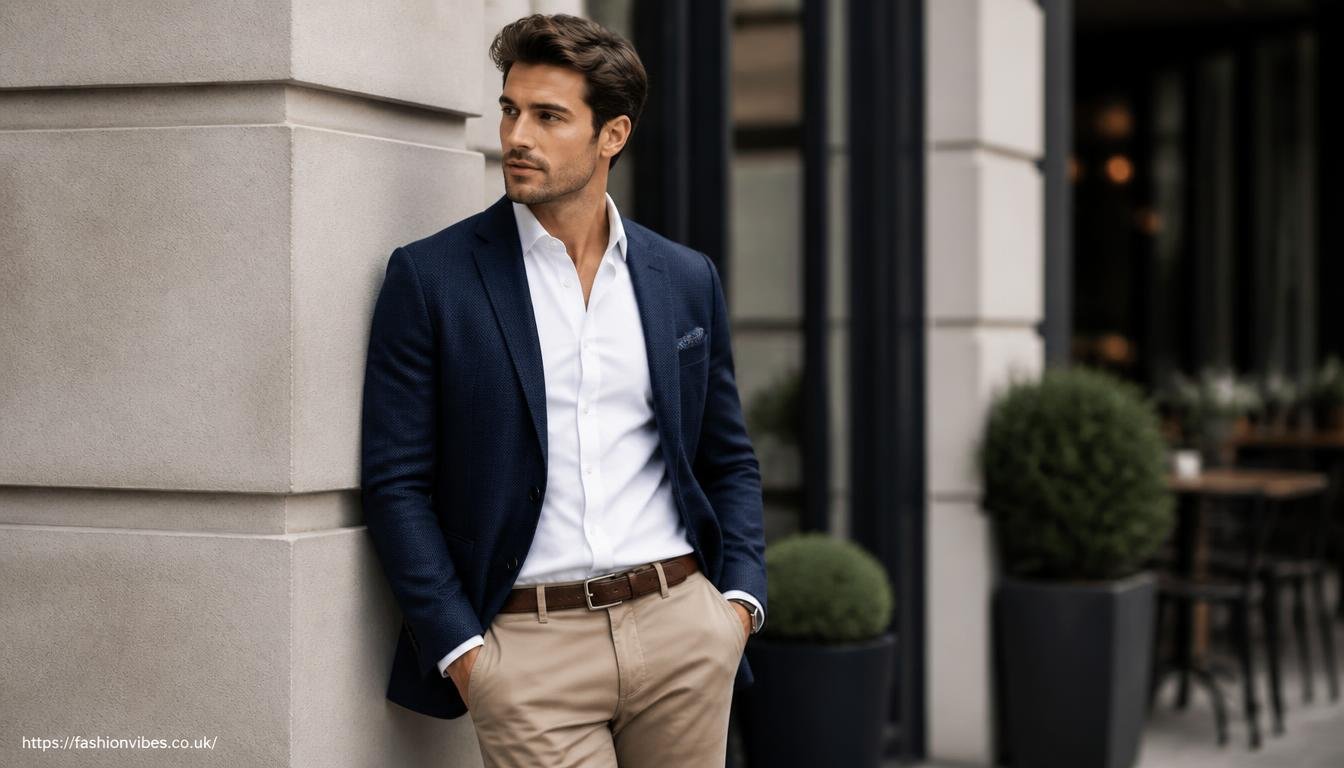
What is smart casual? It’s a dress code that combines casual pieces, chinos, knitwear, clean trainers, with sharper elements like a blazer or leather shoes, aiming for a polished, put together look without the formality of a suit. It sits below business casual on the formality scale but still requires more effort than jeans and a plain t-shirt.
What is Smart Casual Actually Mean?
Smart casual starts from casual wear and adds structure, rather than starting from a suit and removing it, which is how business casual works. A blazer over a t-shirt, leather shoes with dark jeans, a knit polo instead of a plain tee, these are smart casual moves. The dress code allows genuine personal style within polished boundaries, which is part of why it’s harder to pin down than a stricter code like business formal. For how it compares directly against the stricter alternative, see our business casual vs smart casual comparison.
What Is Smart Casual Dress Code, in Practice?
A smart casual dress code, the phrase often seen on invitations and office policies, generally means, and this is really the heart of what is smart casual, no jeans with rips or heavy distressing, no trainers built for sport, no plain t-shirts worn alone, but also no requirement for a full suit or tie. Debrett’s, the long-standing authority on British etiquette, describes it as by far the most common of all dress codes, and notes it typically calls for a jacket and tailored trousers or chinos rather than full business attire. The safest interpretation is “dressed up casual”, clothes that look intentional and cared for, without tipping into full business formality.
Core Pieces That Define Smart Casual
- A blazer or unstructured jacket. The single piece that does the most work in what is smart casual dressing, instantly elevating a t-shirt or knit into something more considered.
- Chinos or dark, clean denim. Structured enough to look put together, relaxed enough to avoid reading as business formal.
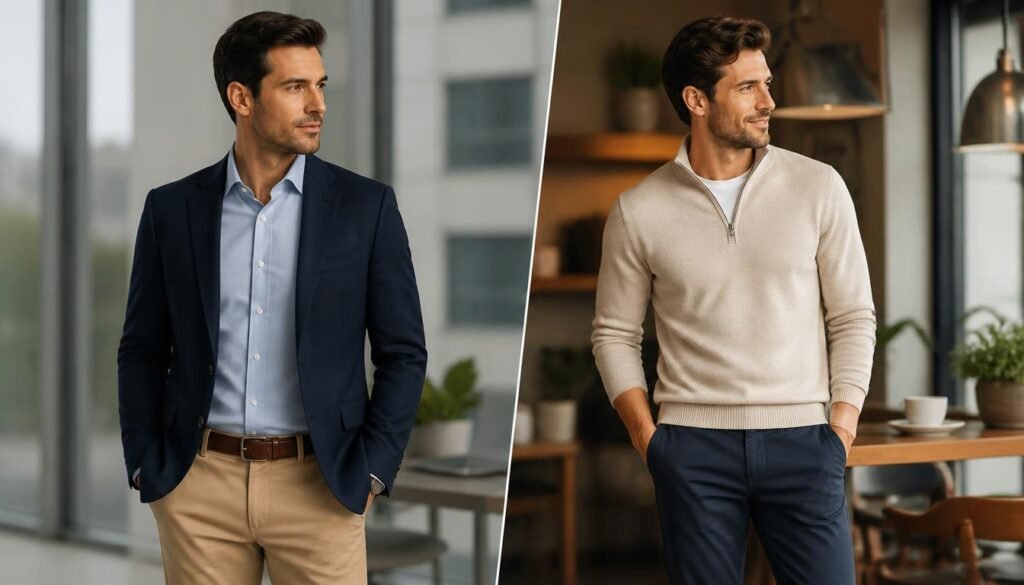
- A knit polo or fine gauge jumper. More texture and personality than a plain dress shirt, while still looking deliberate.
- Leather shoes or refined trainers. Loafers, suede shoes, or a genuinely clean, minimal trainer, never anything built for sport.
Smart Casual vs Casual vs Business Casual
Think of formality as a scale rather than three fixed boxes, and what is smart casual becomes easier to place once you see it this way. Casual sits at one end (t-shirts, trainers, no real structure required). Business formal sits at the other (suit, tie, dress shoes). Smart casual and business casual both occupy the middle, smart casual leaning closer to casual, business casual leaning closer to formal. For a full side by side breakdown of the two middle codes, our business casual vs smart casual guide covers fabric, colour and footwear differences in detail.
What Is Smart Casual for Different Occasions
- Dinners and dates. A knit, dark jeans, leather shoes, and a light jacket if needed.
- Creative or tech offices. Chinos, an open collar shirt or polo, and refined trainers or loafers.
- Weddings (guest, daytime). A blazer with chinos or tailored trousers, a collared shirt, no tie required.
- Weekend social events. The most relaxed end of the code, still put together, less rigid on colour and fit.
For ready made outfit combinations across these situations, see our smart casual outfit guide.
Common Smart Casual Mistakes
- Going too casual. A plain t-shirt and jeans alone, with no blazer, knit or leather shoe, usually reads as just “casual”, not smart casual.
- Going too formal. A full suit with a tie overshoots the brief and can look stiff or out of place at a smart casual event.
- Sport-branded trainers. Even clean ones with visible sport branding tend to undercut an otherwise smart casual outfit.
- Ignoring fit. Smart casual relies more on fit and fabric quality than any single “correct” item, a well fitted basic beats an ill fitting statement piece.
Building a Smart Casual Wardrobe You Can Rely On
You don’t need a large wardrobe to make it work consistently, once you understand what smart casual is really asking for. A single navy blazer, two pairs of well fitted trousers, three or four tops that mix knits and collared shirts, and two pairs of shoes, one leather, one refined trainer, can realistically produce 15 to 20 different outfits once combined. This is the same logic behind a capsule wardrobe, a smaller, more deliberate rotation of pieces tends to get worn far more often than a packed closet full of one-outfit purchases.
Start by auditing what you already own before buying anything new. Most men already have at least two or three genuinely smart casual pieces sitting in their wardrobe, a decent blazer, a pair of dark jeans, a leather shoe, they just haven’t been combined deliberately yet. Once you know what you’re keeping, the real gaps become obvious rather than guessed at.
What Is Smart Casual Colour Palette Basics
What is smart casual, colour-wise? Smart casual gives more room for colour and pattern than business casual, but it still benefits from a coordinated base. Navy, charcoal and stone form a reliable neutral foundation that almost any accent colour can be layered over. Burgundy, olive and mustard all work well as smart casual accents, since they read as considered rather than corporate, while staying easy to pair with the neutral base.
Texture does as much work as colour in a smart casual outfit. Mixing a smooth cotton shirt with a chunky knit, or pairing suede shoes with a crisp chino, creates visual interest without needing a wider colour range. This is part of why a fairly small, coordinated wardrobe can still look varied day to day, the combinations change even when the core palette stays consistent.
How many pieces do I need for a smart casual wardrobe?
Most men can build a working smart casual rotation from around 10 to 12 pieces, a blazer, a couple of trousers, several tops and two pairs of shoes, mixed and layered to produce well over a dozen distinct outfits.
Does smart casual dress code change with the seasons?
Yes. Lighter cotton and linen blends carry the look through spring and summer, while wool blends, heavier knits and a structured coat take over for autumn and winter, with the same core pieces and palette staying consistent year round.
Frequently Asked Questions
What is smart casual for men in simple terms?
A dress code that combines casual pieces, chinos, knitwear, clean trainers, with sharper elements like a blazer or leather shoes, aiming for polished but not formal.
Can jeans be smart casual?
Yes, provided they’re dark, clean and free of rips or heavy distressing, ideally paired with a blazer, knit or leather shoes to keep the overall look elevated.
Is a tie ever appropriate for smart casual?
Generally no. A tie tends to push an outfit into business casual or formal territory, which defeats the relaxed intent of smart casual.
What is smart casual versus business casual?
Smart casual starts from casual wear and adds polish; business casual starts from traditional office wear and relaxes it slightly. Business casual keeps more structure and a stricter colour palette. See our full comparison guide for the complete breakdown.



Leave a Reply