

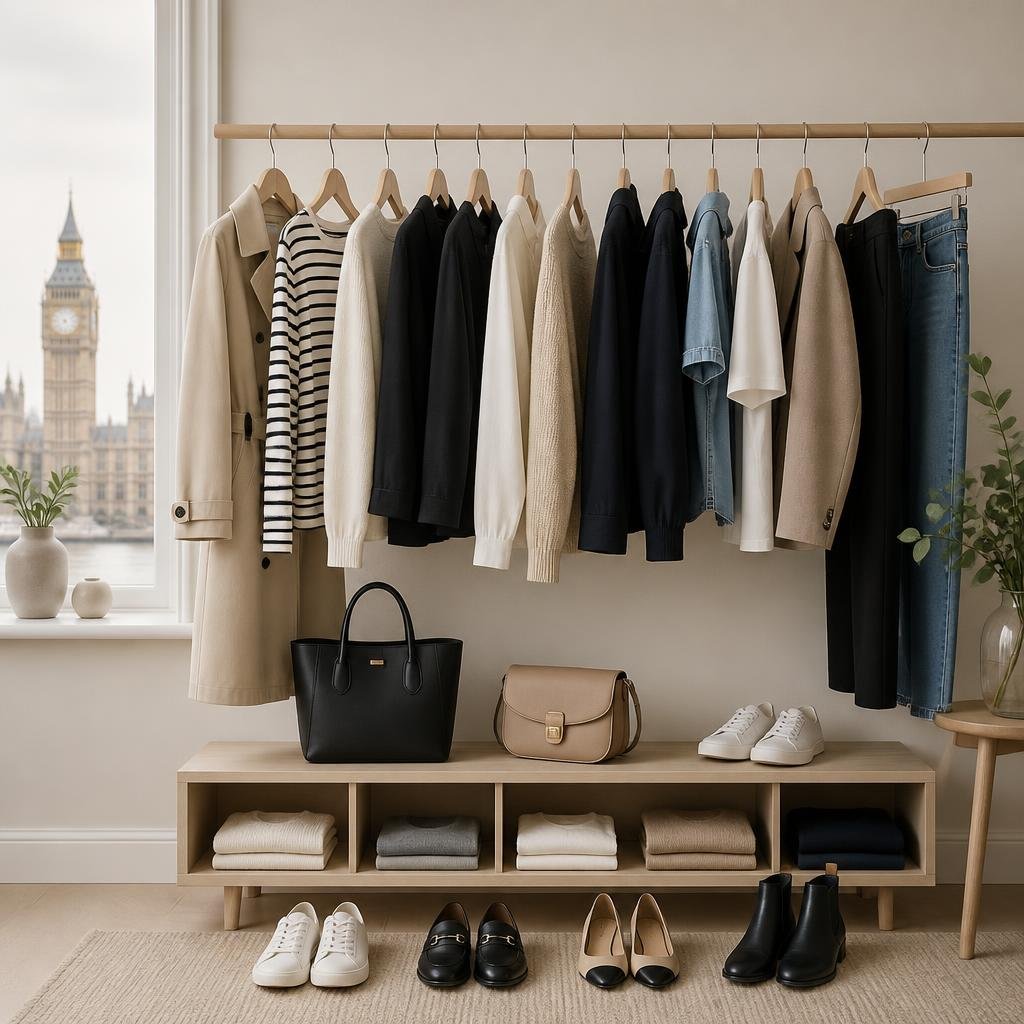
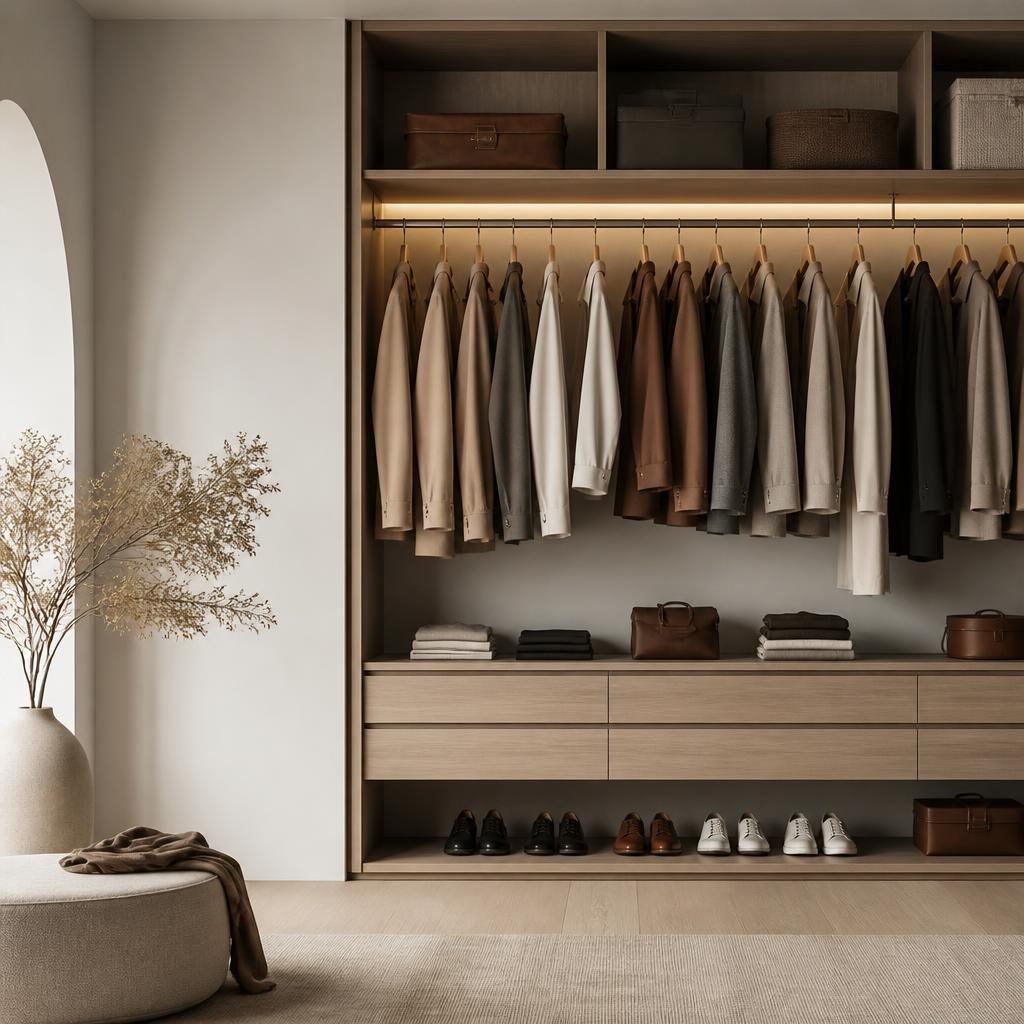
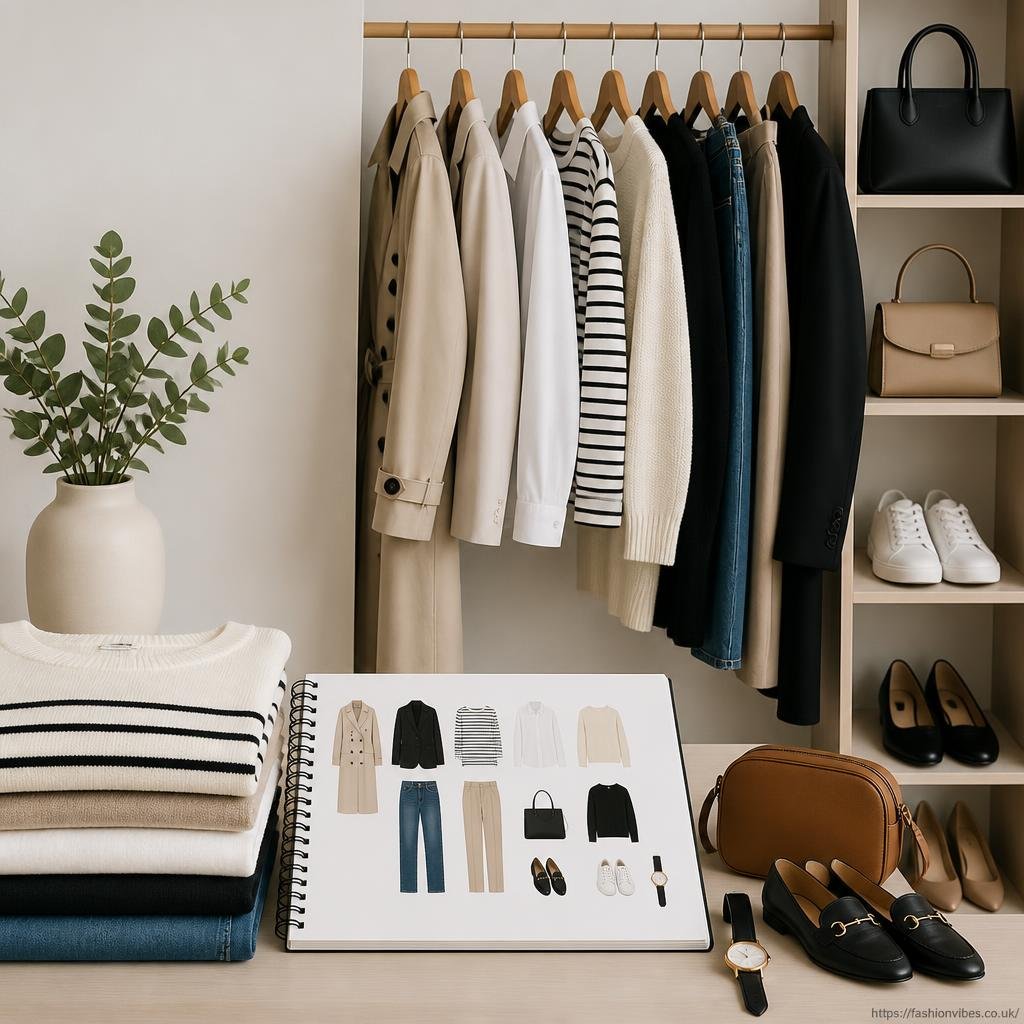
A capsule wardrobe is a small, coordinated collection of clothing, typically 15 to 40 pieces built around a limited colour palette, designed so that nearly every item can be mixed and matched with everything else. This guide covers what a capsule wardrobe is, how many pieces you actually need, the different formulas people use to build one, and how to adapt the idea for UK weather, where a wardrobe needs to survive rain, wind and four seasons that sometimes all show up in the same week.
What Is a Capsule Wardrobe?
At its core, a capsule wardrobe is a wardrobe strategy rather than a shopping list. You choose a small set of clothes, mostly neutral, mostly versatile, that all work together, then add a few seasonal or statement pieces on top. The idea dates back to a 1970s London boutique owner named Susie Faux, and was later popularised in the US by designer Donna Karan’s “Seven Easy Pieces” collection. For the full definition, history and principles, see our dedicated guide on what a capsule wardrobe actually is.
How Many Pieces Do You Actually Need?
This is the question most people search for first, and the honest answer is: it depends on your lifestyle, but most workable capsules land somewhere between 15 and 40 pieces. Several named formulas have grown up around the idea, each with a slightly different philosophy:
| Formula | Item count | Best for |
|---|---|---|
| Quiet luxury / micro wardrobe | 10–15 pieces | Minimalists, capsule beginners |
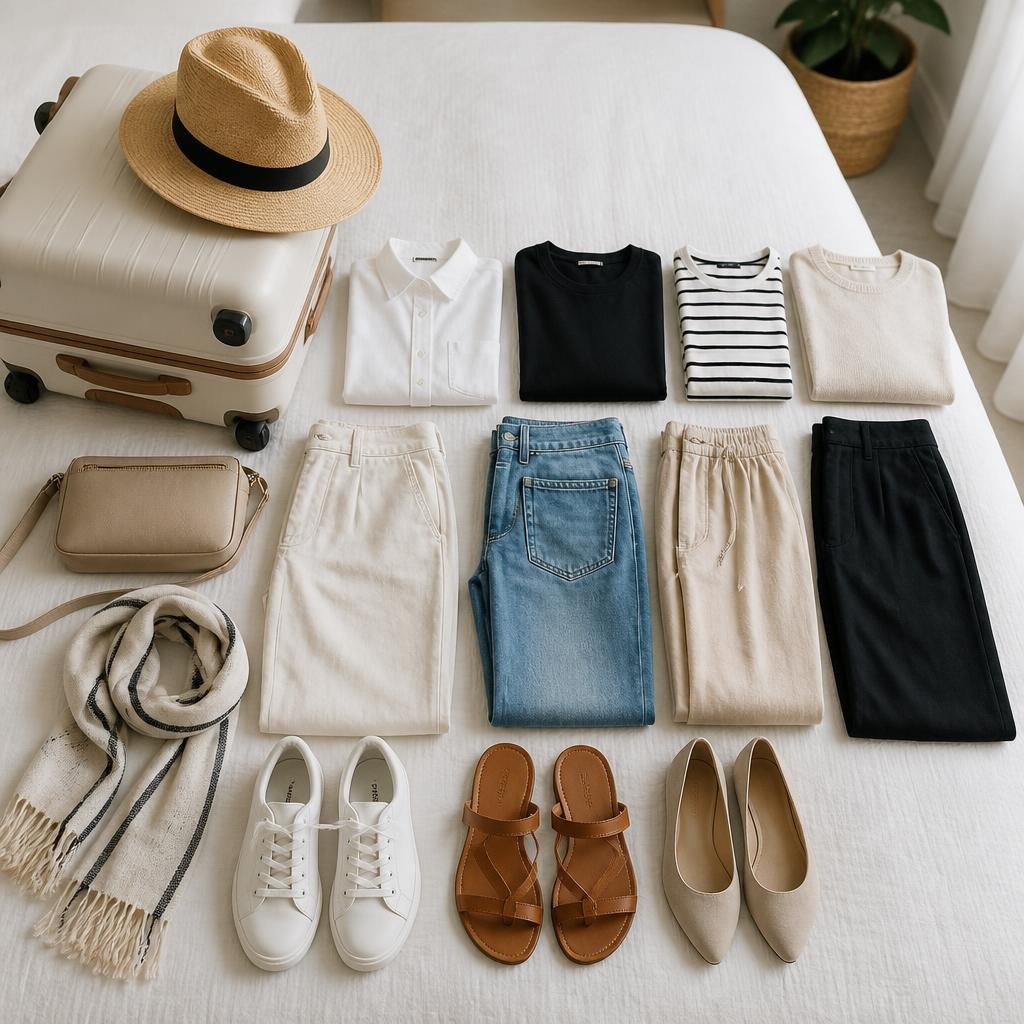
| 3-3-3 method | 9 pieces (3 tops, 3 bottoms, 3 shoes) | Travel, short trips |
| Everyday capsule | 15–25 pieces | Most people, most seasons |
| Project 333 | 33 pieces | A structured 3-month challenge |
| 37-piece rule | 37 pieces (15 tops, 9 bottoms, 4 layers, 4 shoes, 2 dresses, 3 wildcards) | Those who want more variety without a full closet |
| Classic capsule | 30–40 pieces | A full seasonal wardrobe, outerwear included |
None of these numbers is mandatory. They’re training wheels, useful for narrowing decisions when you’re starting out, and worth abandoning once you have a feel for what you actually wear. For a guided, step-by-step way to land on your own number, read how to build a capsule wardrobe.
The Core Principles Behind Every Capsule Wardrobe
- Limited colour palette. Two or three neutral base tones (navy, black, camel, grey or cream) with one or two accent colours layered in for variety.
- Versatility first. Every piece should pair with at least three to five other items already in your wardrobe before it earns a place.
- Quality over quantity. Fewer, better-made pieces cost less per wear over time and hold their shape longer.
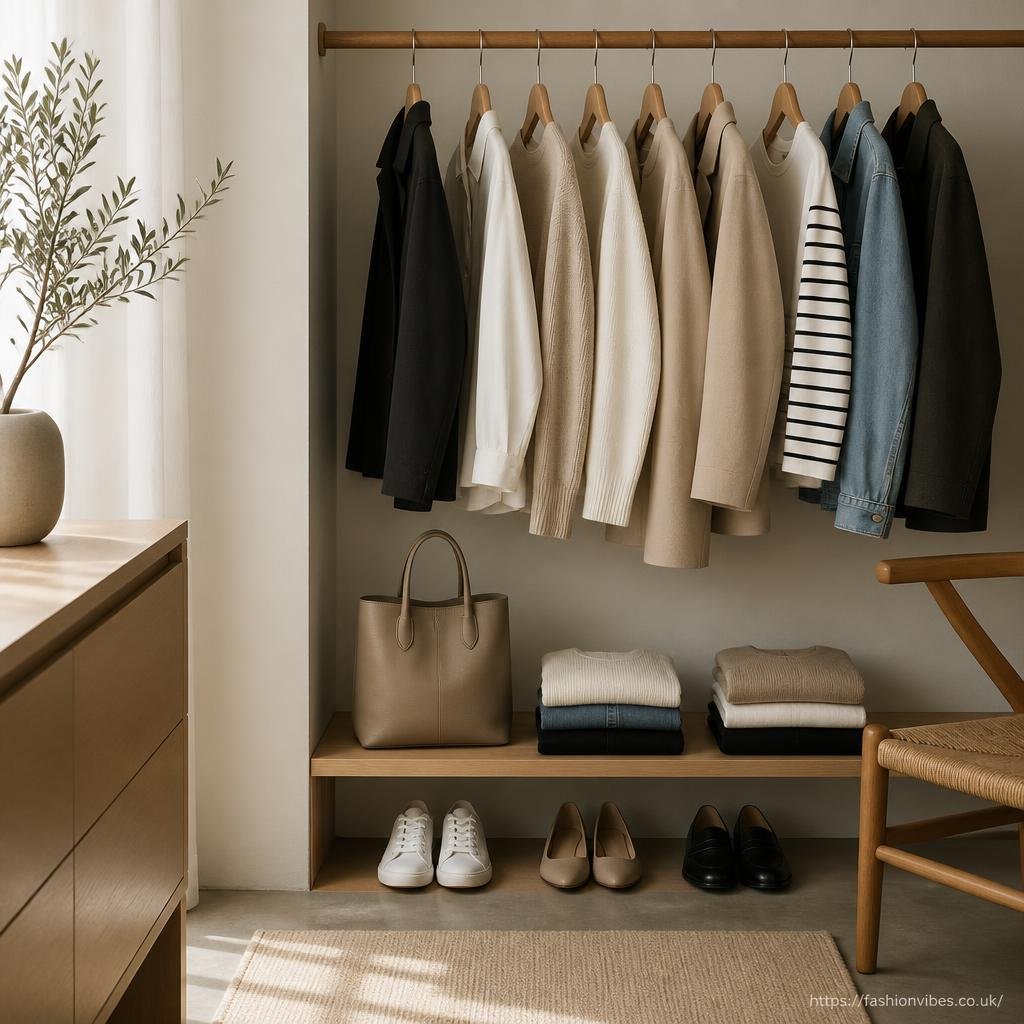
- Seasonal rotation. Off-season clothing is stored, not left cluttering the active rail, so the working wardrobe stays genuinely small.
- The one-in, one-out rule. Before buying something new, decide what leaves. It keeps the capsule from quietly growing back into a packed closet.
Types of Capsule Wardrobes
“Capsule wardrobe” is an umbrella term, and several more specific approaches sit underneath it, each suited to a different goal:
- Micro wardrobe – an even more tightly edited 10–15 piece version, popular with minimalists and quiet-luxury dressers.
- Closet capsule – the full closet audit-and-rebuild process, starting from what you already own.
- Capsule wardrobe for women – gendered essentials, outfit formulas and shopping lists.
- Clothes capsule / capsule clothing – the same method, viewed from the individual garment rather than the whole wardrobe.
- Travel capsule – a compact 10–20 piece version designed to fit in hand luggage while still covering a week or more.
- Work capsule – a smaller, dress-code-appropriate subset for the office, often layered on top of a casual base capsule.
Building a Capsule Wardrobe for UK Weather
A capsule wardrobe built for a consistently warm or consistently cold climate doesn’t translate directly to the UK, where a single week can move from rain to sun to a cold snap without much warning. Layering does most of the work here: a lightweight base layer, a mid layer such as a knit or shirt, and one or two outer layers (a mac, a wool coat, a lightweight jacket) that can be added or removed as the day changes. Transitional pieces, items that work across two seasons rather than just one, are especially valuable in a UK capsule. Retailers like M&S release dedicated transitional collections each spring and autumn for exactly this reason; see our roundup of M&S transitional fashion items for current picks. For the colder end of the year specifically, our cold weather layering guide covers how to stack pieces without bulk.
Common Mistakes to Avoid
- Buying the whole capsule at once. Start with what you own, audit it honestly, then fill genuine gaps gradually.
- Choosing colours you don’t actually wear. A palette should reflect what you already reach for, not a Pinterest board.
- Ignoring your actual lifestyle. A capsule built around office wear won’t suit someone who works from home in leggings most days, and vice versa.
- Treating the item count as a hard rule. The number is a guide, not a test to pass.
Benefits of Switching to a Capsule Wardrobe
Beyond the aesthetic appeal, a capsule wardrobe tends to reduce decision fatigue, since there are simply fewer combinations to weigh each morning. It also lowers the cost per wear of each item, because pieces get worn far more often than they would in an overstuffed closet, and it naturally discourages the kind of impulse buying that doesn’t fit an existing colour story, which is part of why the approach is often linked to more sustainable shopping habits.
Capsule Wardrobe Formulas Compared in Detail
Beyond the basic item-count table above, each named formula carries a slightly different philosophy worth understanding before picking one. Project 333 is deliberately strict, a fixed 33 items for three months, accessories and sleepwear excluded, designed as a short experiment rather than a permanent system. The 37-piece rule is more forgiving, built around specific category minimums, tops, bottoms, layers, shoes, dresses and a small allowance for “wildcard” pieces that don’t fit neatly elsewhere. The 3-3-3 method strips things down even further and works best as a travel or trial exercise rather than a full wardrobe strategy. None of these formulas is objectively correct, they’re different entry points into the same underlying idea, and most people eventually land somewhere between them once they understand what they actually wear.
How Long a Capsule Wardrobe Takes to Settle Into
The initial audit and palette decision usually take a single weekend, but a capsule wardrobe rarely feels finished that quickly. Most people spend a full season, sometimes two, adjusting the mix once they see which pieces actually get worn and which quietly sit unused. This settling-in period is normal and expected, not a sign the system isn’t working, treating the first version as a draft rather than a finished product tends to produce a far better result by the second season.
Capsule Wardrobe Myths Worth Ignoring
- “You need exactly 33 items.” Numbered formulas are starting points, not requirements. The right count depends entirely on your climate, job and lifestyle.
- “A capsule wardrobe means boring clothes.” A limited palette doesn’t mean no personality, accent colours, texture and accessories carry plenty of visual interest within a coordinated base.
- “You have to buy everything new to start.” Most people can build the core of a capsule almost entirely from pieces they already own.
- “It only works for minimalists.” The method suits anyone who wants faster mornings and fewer decision points, regardless of how minimal their overall aesthetic is.
Frequently Asked Questions
What is a capsule wardrobe, in simple terms?
It’s a small, coordinated set of clothes, usually 15 to 40 pieces, chosen so that almost any top can be worn with almost any bottom, layer or shoe already in the wardrobe.
How many pieces should a capsule wardrobe have?
Most fall between 15 and 40 pieces excluding accessories and sleepwear, though tightly edited “micro” versions can be as few as 10–15 and travel capsules often sit around 10.
Can I build a capsule wardrobe without buying anything new?
Yes, and most guides recommend starting exactly this way. Audit what you already own first, identify genuine gaps, then shop deliberately rather than all at once.
Is a capsule wardrobe practical for UK weather?
Yes, with layering built in as a core principle rather than an afterthought. Transitional pieces that work across two seasons are particularly useful given how changeable UK weather tends to be.
How often should a capsule wardrobe be updated?
Most people refresh seasonally, roughly four times a year, swapping heavier or lighter layers in and out while keeping core neutral pieces in place year-round.
Explore the Full Capsule Wardrobe Series
- What Is a Capsule Wardrobe? Meaning, Benefits & How It Works
- How to Build a Capsule Wardrobe: Step-by-Step UK Guide
- Micro Wardrobe: The Minimalist’s Guide to Fewer, Better Clothes
- Closet Capsule: How to Create One Step by Step
- Clothes Capsule & Capsule Clothing: What They Mean and How to Start
- Capsule Wardrobe for Women: Essential Pieces & Outfit Formulas
- Capsule Wardrobe Ideas for Women: How to Style a Small, Versatile Closet
- Travel Capsule Wardrobe: How to Pack Light for Any Trip
- Tonal Dressing: How to Wear One Colour Head to Toe
- M&S Transitional Fashion Items for Your Capsule Wardrobe
- 10 Best Wardrobe Essentials for Women
- Everyday Outfits for Women UK






Leave a Reply