

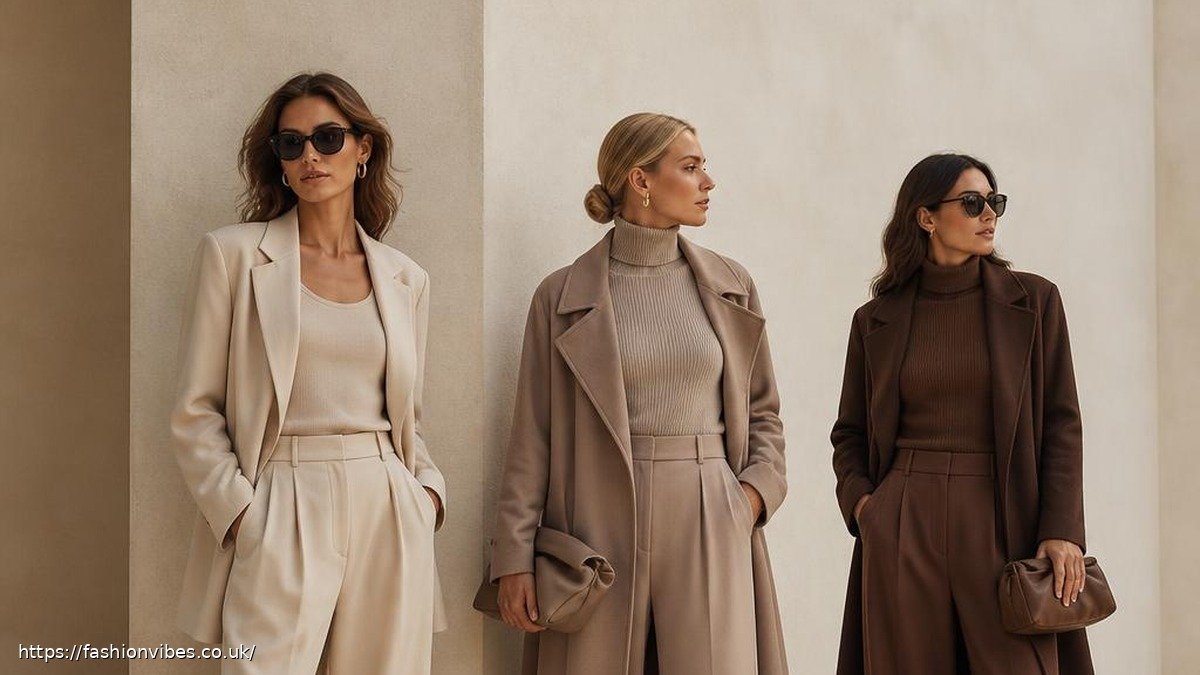
Tonal dressing means wearing one colour family from head to toe, mixing different shades, textures and finishes of that same colour rather than a single flat block. It’s one of the few fashion trends that keeps resurfacing year after year without ever really going away, because the technique itself, not any single colour, is what makes it work.
What Tonal Dressing Actually Means
Tonal dressing, sometimes called monochromatic dressing, is built on shade variation rather than an exact colour match. A cream jumper, an oat coat and a stone trouser all count as “tonal” even though none of them are identical, the eye reads the outfit as one cohesive palette rather than three separate decisions. This distinction relates to how colour theory defines monochromatic schemes, variations in lightness and saturation of a single hue, rather than an identical block of one shade. This is different from simply wearing “all black” or “all navy”, tonal dressing deliberately plays with lighter and darker versions of the same hue to add depth.
Why Texture Matters More Than Colour Here
Menswear cutters and stylists consistently point to the same rule: texture is what stops a tonal outfit looking flat. Mixing a smooth cotton shirt with a chunky knit, or a matte trouser with a glossy leather bag, creates the contrast that a single block of colour can’t provide on its own. Without that variation, an all in one colour outfit can start to look like a uniform rather than a considered look.
How to Build a Tonal Outfit, Step by Step
- Pick a base colour you already own plenty of. Tonal dressing works best built from a colour that’s already well represented in your wardrobe, camel, navy and grey are the easiest starting points.
- Layer at least three shades of it. A dark trouser, a mid tone knit and a lighter coat gives the outfit gradient rather than flatness.
- Vary the texture in every layer. Knit, leather, wool and cotton in the same colour family read as intentional; identical fabrics in the same shade can look accidental.
- Add one contrast piece if the look feels too heavy. A white shirt or a single neutral accessory breaks up an otherwise solid palette without undoing the effect.
- Finish with metallics as a neutral. Gold or silver jewellery works with almost any tonal palette and doesn’t compete with the colour story.
Easy Tonal Colour Palettes to Start With
| Palette | Best for |
|---|---|
| Camel, oat, stone | Daytime, office, easiest entry point |
| Charcoal, grey, black | Evening, high contrast, structured occasions |
| Chocolate brown, tan, cream | Autumn/winter, currently a strong seasonal favourite |
| Navy, denim, powder blue | Casual weekends, relaxed tonal dressing |
Building Tonal Outfits From a Small Wardrobe
Tonal dressing pairs naturally with a small, coordinated wardrobe, since a limited colour palette is exactly what a capsule wardrobe is built around. If your existing wardrobe already leans neutral, you likely have most of a tonal outfit sitting in your closet already. Our capsule wardrobe guide covers how to build a coordinated palette from scratch, and our capsule wardrobe for women guide has outfit formulas that translate directly into tonal combinations with a few small swaps.
Common Tonal Dressing Mistakes
- Using fabrics that are too similar. Head to toe identical fabric in one colour reads as a uniform rather than a styled outfit.
- Going too dark without contrast. An all black or all charcoal look benefits from at least one lighter or glossier element to avoid looking flat.
- Ignoring skin tone. Warm tones like camel and chocolate tend to suit warmer undertones best; cooler greys and blues often suit cooler undertones better.
- Overcomplicating the palette. Sticking to one colour family, rather than mixing two or three, is what makes the technique read as deliberate.
Frequently Asked Questions
Is tonal dressing the same as wearing all black?
Not quite. Wearing all one flat shade is a version of tonal dressing, but the technique is strongest when it mixes lighter and darker versions of the same colour, plus varied textures, rather than one identical shade throughout.
What colours work best for tonal dressing?
Neutrals like camel, grey and navy are the easiest starting point since most wardrobes already contain several shades of them. Bolder colours like burgundy or emerald also work well once you’re comfortable with the technique.
Does tonal dressing suit every body shape?
Yes, and it can be particularly flattering, since an unbroken colour line tends to elongate the silhouette. Adding contrast through texture rather than colour keeps the look interesting without breaking up that line.
Is tonal dressing a passing trend?
It’s resurfaced consistently across multiple fashion seasons rather than disappearing after one year, which suggests it functions more as a lasting styling technique than a short lived trend.





Leave a Reply