

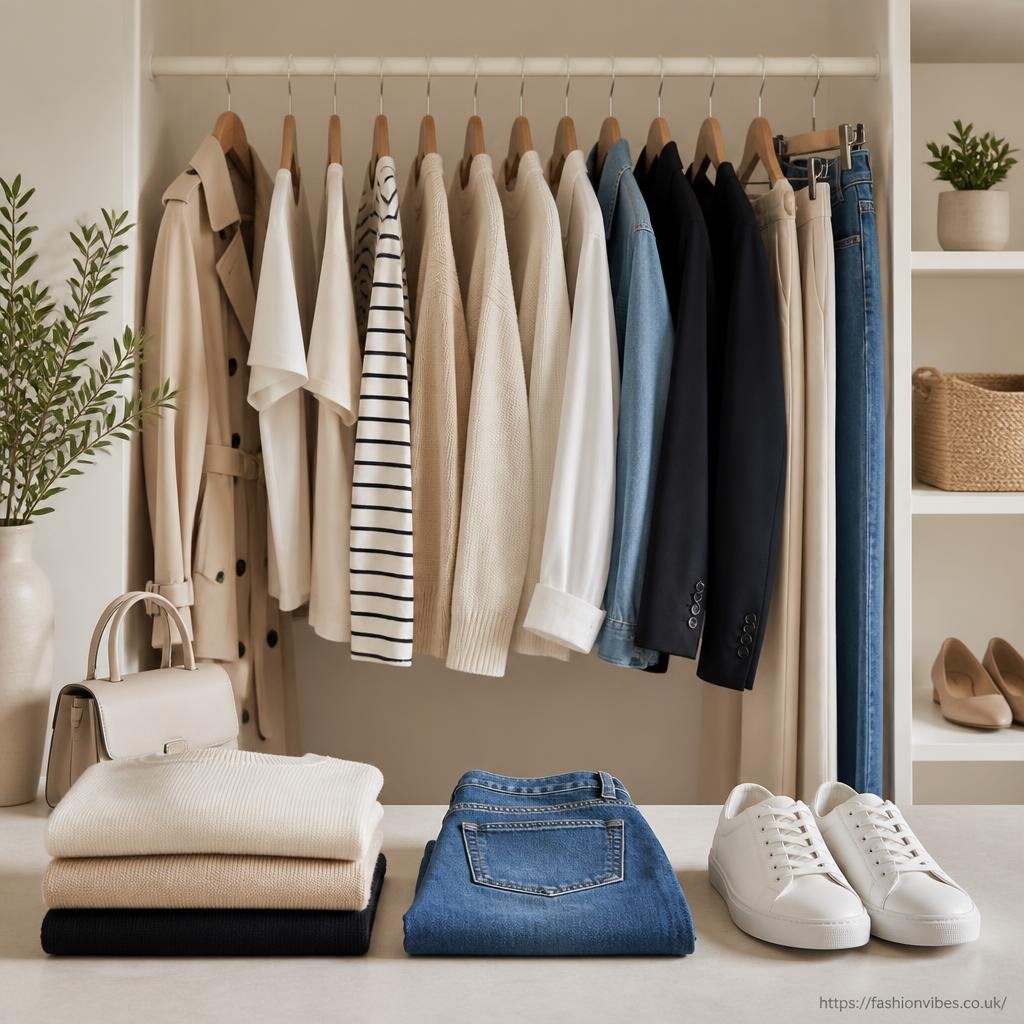
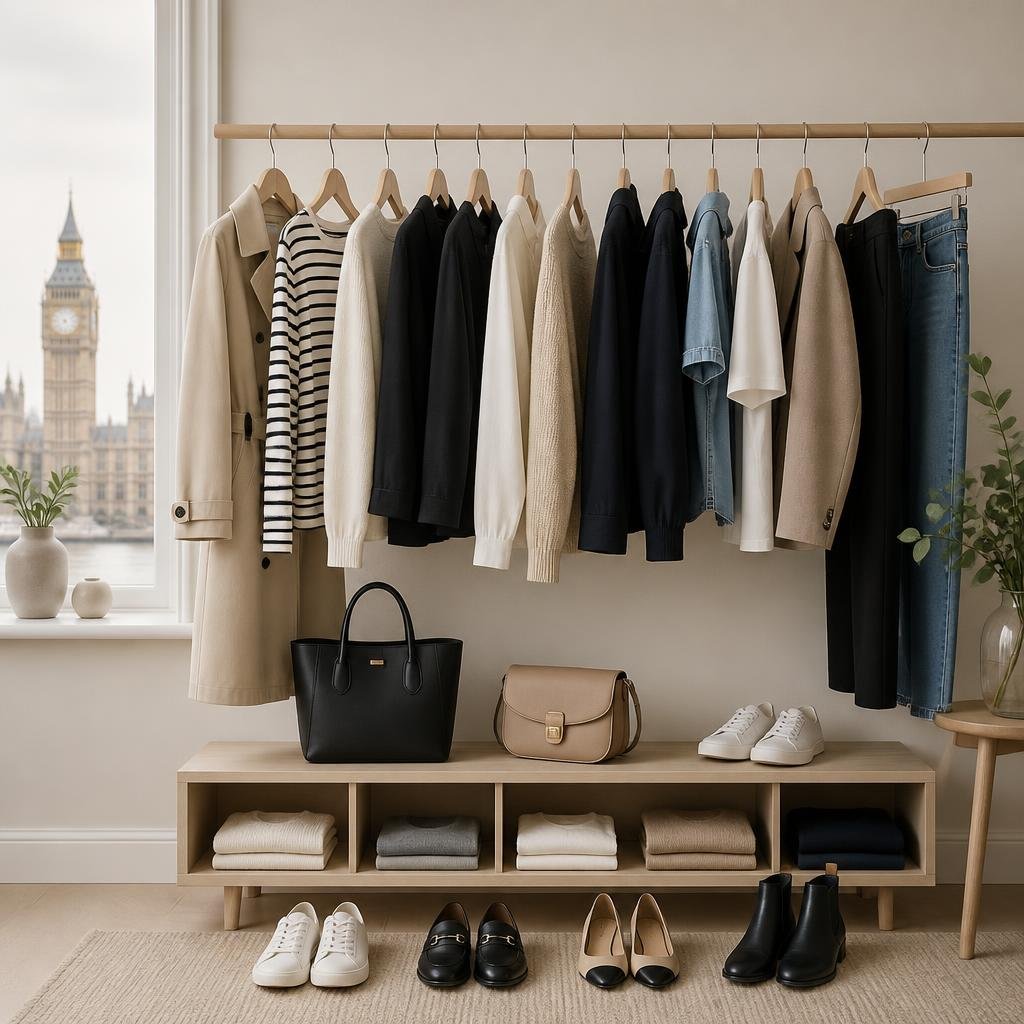
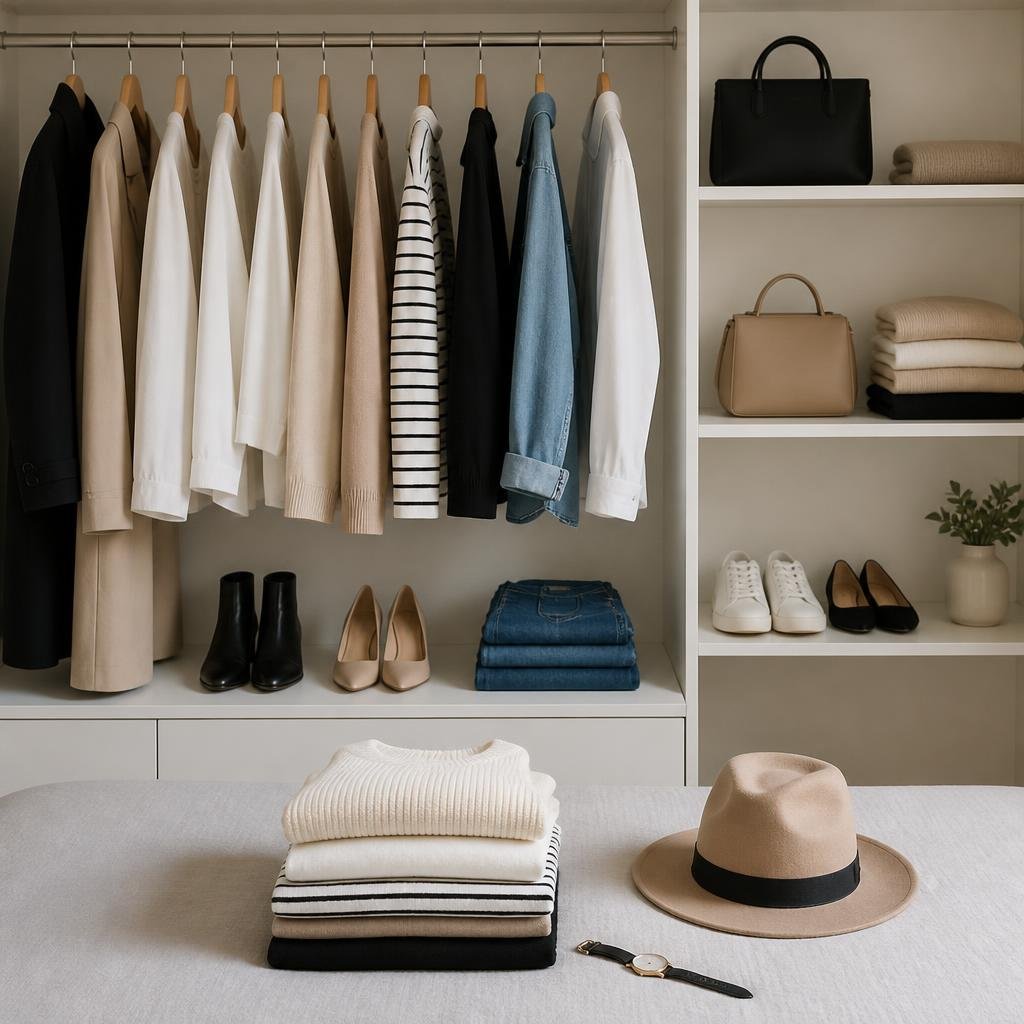
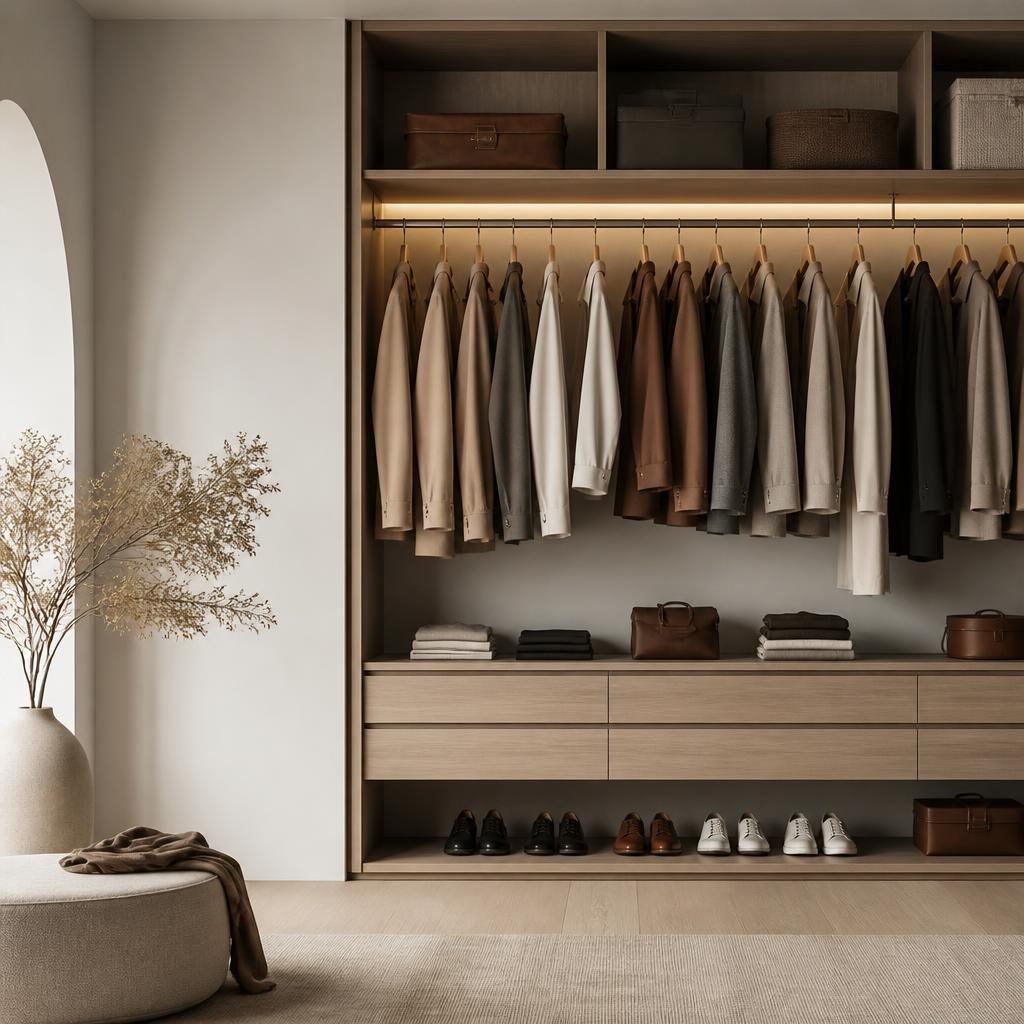
Capsule wardrobe ideas are about how to combine a small set of clothes into outfits, not just which pieces to buy. Once you have a coordinated core wardrobe, the real skill is styling, layering, mixing textures and using accessories, so the same handful of pieces can look different from one day to the next.
Start From What You Already Have
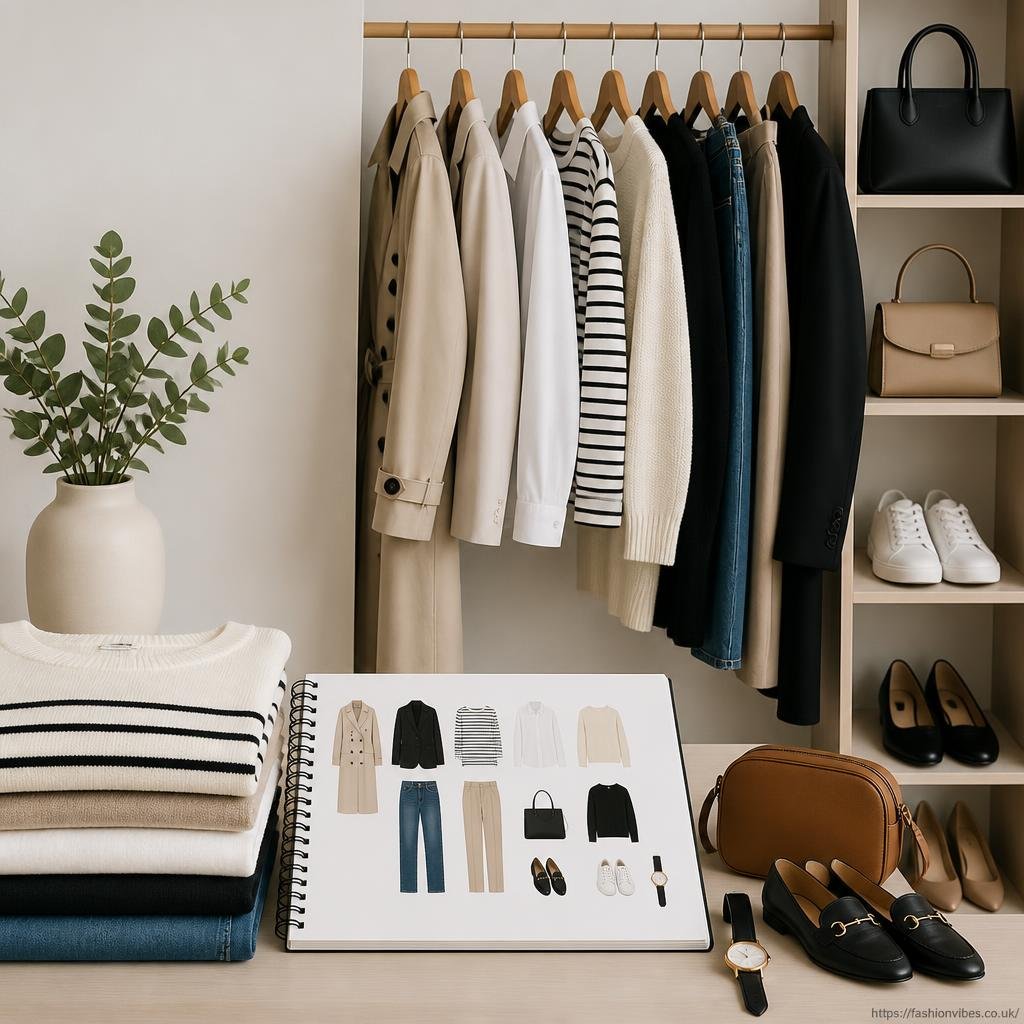
Before shopping for anything new, it’s worth working out how many outfits you can already build from your current pieces. Lay out your keep pile and try genuinely unexpected combinations, a top you’d normally wear one way, paired with something you wouldn’t automatically reach for. If you haven’t audited your wardrobe yet, our step-by-step capsule wardrobe guide covers the process from scratch, and our list of wardrobe essentials for women is a useful checklist if you’re deciding what to keep.
Outfit Ideas by Occasion
- Everyday errands – jeans, a fine knit and trainers, add a cross-body bag for hands-free practicality.
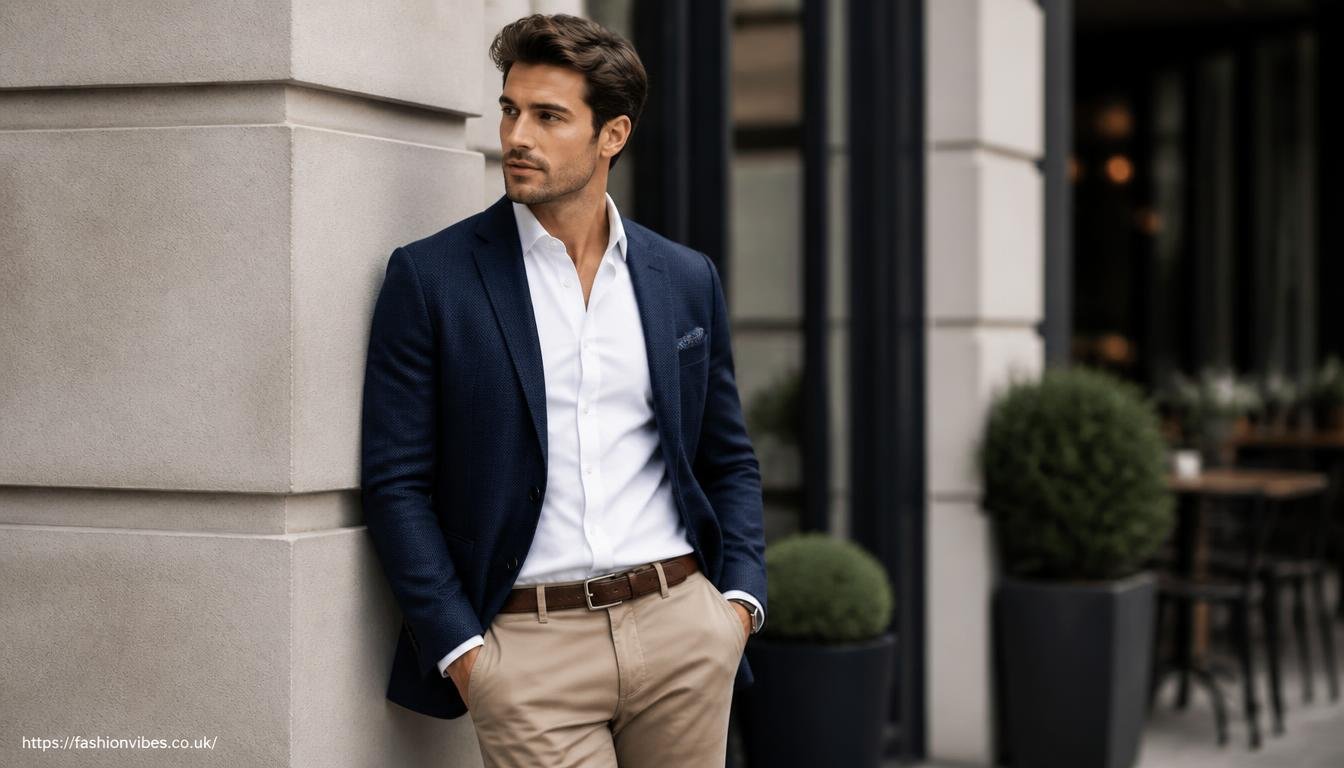
- Office days – tailored trousers, a shirt, and a blazer that can come off once you’re at your desk.
- Casual weekend – a midi dress layered under a denim jacket, finished with flat boots.
- Evening plans – swap flats for heels and add a statement earring to an outfit you already wore that morning.
For more ready-made combinations, our 30 simple outfit ideas for women and everyday outfits for women UK guides give a wider range of looks built from small wardrobe rotations.
Mixing Textures and Layers
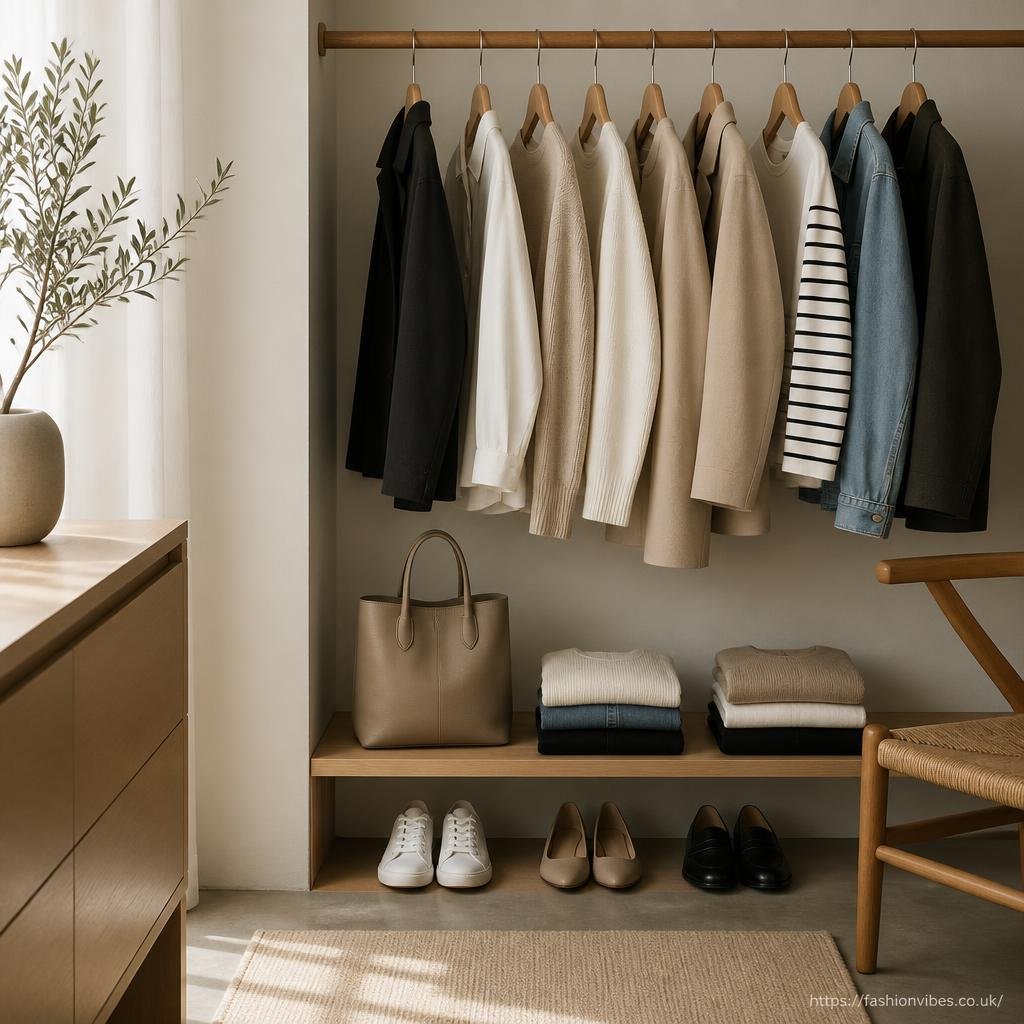
A limited colour palette can start to feel flat if every piece has the same texture. Mixing a smooth cotton shirt with a chunky knit, or a structured blazer with a soft jersey dress, adds visual interest without adding more clothes. Layering also stretches a capsule across UK weather, a lightweight top under a knit, under a coat, covers a much wider temperature range than any single piece could alone. Our cold weather layering guide goes deeper on stacking pieces without looking bulky.
Using Colour Strategically
Within a mostly neutral capsule, one or two accent colours can be repeated across the wardrobe to tie outfits together without needing more pieces. A single burgundy scarf, for example, can be worn with several different neutral outfits and instantly makes the wardrobe feel more considered rather than plain. A useful structure borrowed from interior design is the 60-30-10 colour rule: 60% dominant colour (usually trousers, a dress or a coat), 30% secondary colour (a top or blazer), and 10% accent (an accessory or shoe). Applying this consistently across a small capsule keeps every outfit feeling coordinated rather than random.
Styling Ideas for Different Body Shapes
The same capsule pieces can be styled differently depending on what you want to emphasise. Tucking a top into high-waisted trousers defines the waist; leaving it loose over a straight-leg pair softens the silhouette. A blazer worn open lengthens the line of an outfit, while the same blazer buttoned adds structure. None of this requires new clothes, it’s the same capsule wardrobe ideas applied with slightly different technique depending on the look you’re going for that day.
Building a Capsule Lookbook
Photograph outfit combinations as you try them, ideally in decent light, and keep them somewhere easy to browse, a phone album works well. On busy mornings, scrolling through pre-planned outfits is faster than starting from scratch, and it’s a simple way to see just how much variety a small capsule can actually produce.
Refreshing Ideas Seasonally
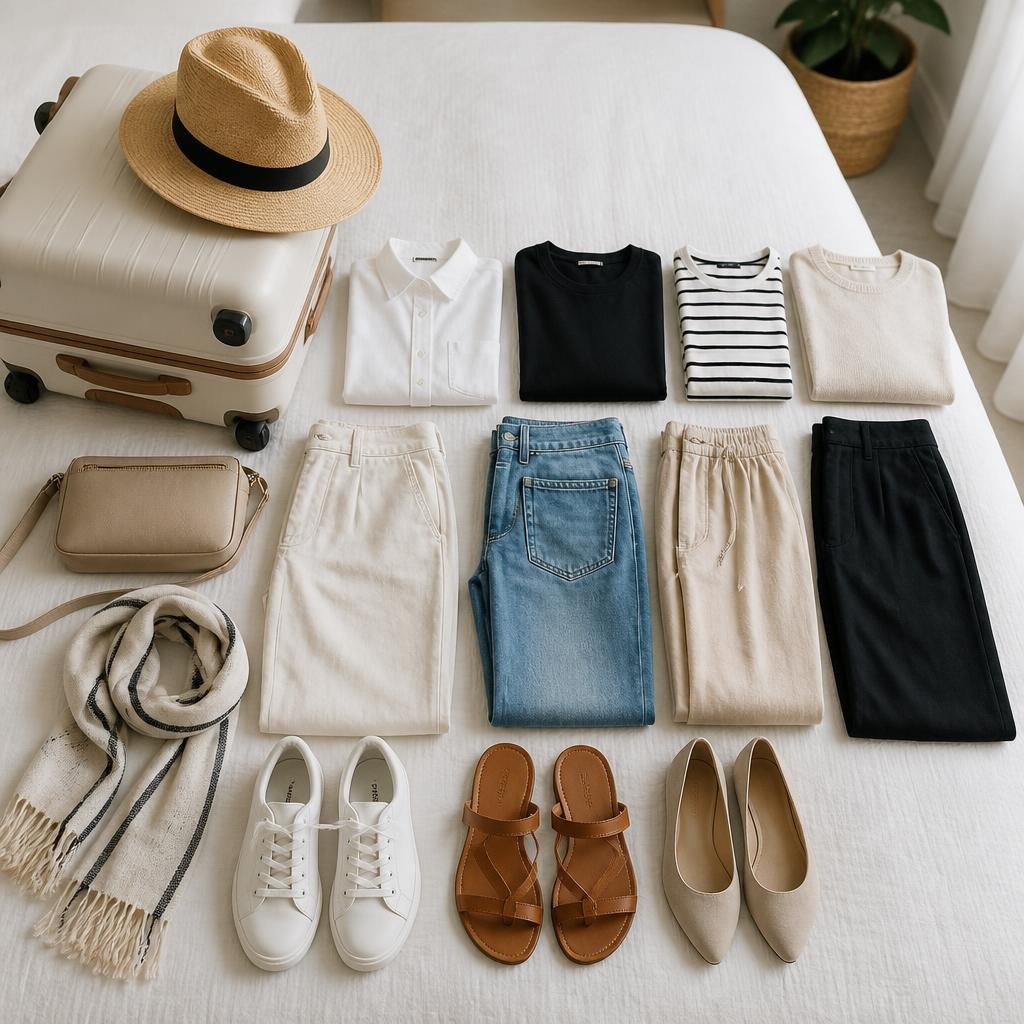
The core capsule can stay largely the same while the styling shifts with the seasons, swapping trainers for boots, adding tights under dresses, or layering a jacket over a summer outfit for a transitional month. For seasonal shopping ideas that slot straight into an existing capsule, see our M&S transitional fashion items roundup and our guide to women’s summer dresses.
Accessorising Without Buying More Clothes
Accessories are the fastest way to reset a small wardrobe’s energy without adding to the core piece count. A structured bag, a patterned scarf or a pair of statement earrings can make the same outfit feel intentional rather than repeated, and unlike clothing, accessories don’t need to fit a rigid colour palette to work. Rotating just three or four accessory pieces across a season’s outfits creates far more visible variety than most people expect from such a small addition.
Belts are particularly underused in capsule wardrobe styling. Cinching a loose dress or an oversized shirt at the waist changes the whole silhouette of an outfit already in rotation, effectively creating a new look from an existing piece without any new clothing at all.
How many accessories do I actually need for a capsule wardrobe?
Around five to eight pieces, a couple of bags, a few pairs of earrings, one or two scarves and a belt, is usually enough to meaningfully vary a small clothing capsule without the accessory collection becoming its own clutter problem.
Can capsule wardrobe styling work for evening wear too?
Yes, usually by dressing up existing daytime pieces rather than buying separate eveningwear. Swapping flats for heels, adding statement jewellery, or layering a slip dress over a fine knit are common ways to shift a capsule piece from day to evening.
Frequently Asked Questions
How many outfits can a capsule wardrobe really produce?
A well-planned 20-piece capsule can typically generate 30 to 50 outfit combinations once tops, bottoms, layers and shoes are mixed and matched.
How do I keep a small wardrobe from feeling repetitive?
Vary textures, layering and accessories rather than adding more clothes. Photographing combinations you like also helps you notice options you might otherwise overlook.
Should accessories be part of my capsule wardrobe ideas?
Yes, accessories are one of the easiest ways to make a small number of core pieces feel different day to day, without expanding the clothing count itself.


Leave a Reply